Rethinking “Early Specialization”
A ton of stigma has surrounded youth baseball culture in the last ten years, and I cannot say that it isn’t well deserved. I just recently had a very promising teenage athlete deal with a pretty gnarly collision injury in a baseball tournament this past weekend (it’s January). Pretty easy to be enraged from a far and wonder “why are they playing a 7-game tournament in January??” This topic always sparks conversations about kids playing too many baseball games, how teenagers should be playing 3 sports, how every kid is going to be severely burnt out by age 18, and so on. While I do believe it is generally not a good idea to play a prolonged tournament in January, who am I to tell my 15 year old athlete that he can’t go travel south and play baseball in warm weather in the heart of a Northern Idaho winter? Or tell him he should go play basketball even though he just wants to take hundreds of swings a week? Most parents would never allow their kids the opportunity to play baseball this time of year, but looking back on things, I am sure glad my parents did. I played a ton of baseball in high school year-round, and I still wanted to show up to the gym every day for 10 years after HS and train hard because I loved it. I still love it. I am recently retired from baseball and still train harder than most of my athletes (I routinely let them know that).
In general I believe athletes can be very well rounded without playing multiple sports. I think most of the stemming issues of burnout, injury, teenagers that hit a wall talent-wise, etc. is a preparation and development issue, not an issue of the game itself. In my opinion it is driven by the way we build the athletes development around the sport from an adolescent age. Younger athletes are not stalling out because they are playing 60 games a year instead of 30 games. I believe the hours being spent at practice and training between all of these games are being completely wasted doing things like “working on pitching mechanics”, making 14-year-olds do rounds and rounds of pickoff moves and PFP’s, “hammering the basics of the game”, “sport-specific” training, dumping “verbal cues” that make players as robotic as can be, and so on. If the training model were wider scope with more variation, more donor sports, more creativity, and more intentional over the years, “early specialization” would be a term surrounded with much less stigma. The sport is literally just a game with rules. I urge those reading to work around and bend those rules in controlled environments more often. Create better problems.
When I mention wider scope and more variation most minds will go to “well that is why they should play more sports!”. I think this answer is lazy and context dependent. I will use my own development as an example. Plain and simple, if I would’ve tried to play three sports in High School, I would not have been a professional baseball player (at the risk of sounding contradictory, I’m not at all against multiple sports obviously). I was average at best when I started playing and while I was a very good athlete, my skillset was very raw. I needed hours and hours of swinging and throwing before I started to stumble upon stable attractors (movement solutions). This required much of my time and I would not have been able to become consistently elite among my peers if I were to just get “good” at 3 different sports. If my goal was to try out different sports and be an average college athlete then I probably would’ve tried multiple sports in High School, but to actually fulfill my goal of getting drafted it required hours upon hours of training at a younger age for me. You’ll hear things like “well this athlete played 3 sports and he’s a big leaguer”. I am here to tell you in most cases that this athlete was a clear genetic outlier and could’ve probably done just about anything at the highest level. As the sport of baseball continues to get better and better you will also see less and less of those cases in my opinion.
All in all baseball is actually full of variability. Different positions within the game, different throws, different movement solutions, different environments, etc. The stemming issue is that coaches and practitioners remove that variability and replace it with stale coaching as previously mentioned. This is where wide scope preparation matters. Exposure to other sports do give athletes different shapes of movement, different rhythms, different perceptual demands, and different coordination problems to solve. This is fuel for motor learning because it builds a bigger library of solutions the brain can pull from. This can be easily applied into training and practice for baseball. Throw footballs, hit tennis balls with racquets, swing a club, throw a javelin, run football routes, work on spiking a volleyball, just be creative and put in more damn effort. Microdose these skills within the parameters of baseball skill work and watch your athletes continue to grow year after year with less burnout. Have fun!
If the athlete only sees one narrow set of problems month to month, they become overfit to that environment and end up losing interest and true intent. This is why environmental and task specific constraint changes matter. Exposure to different tasks, different speeds, different implements, and different contexts force the athlete to recalibrate under different demands. The goal is not just clean reps repeatably in a practice environment. The goal is a problem solver who can adjust on the fly without conscious thought.
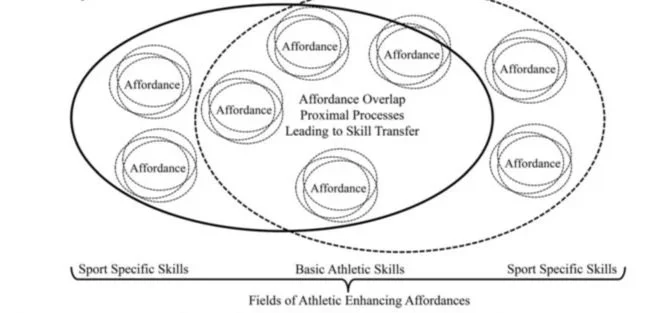
Narrow preparation early on creates an athlete with very little runway in a sense. A broader training model builds global strength, general athleticism, and problem-solving skills. When you use a wide scope approach, other sports, dynamic games, and a long-term progression of training methods, you can continually develop athletes’ long term that don’t want to stop playing the sport of baseball (or any other sport). The sport is not the problem. The development is.
